Underlays and Silicone Backups for RESISTRON® Impulse Sealing Systems
In RESISTRON® impulse sealing systems, the underlay and the opposing sealing bar facing are critical functional components of the sealing process. Both are selected and adapted to the specific application and sealing bar design to ensure stable, repeatable, and precisely controlled sealing conditions.
Underlays for Sealing Bands
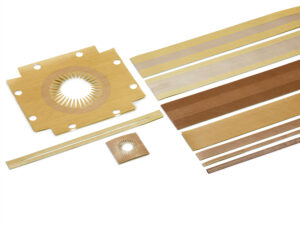
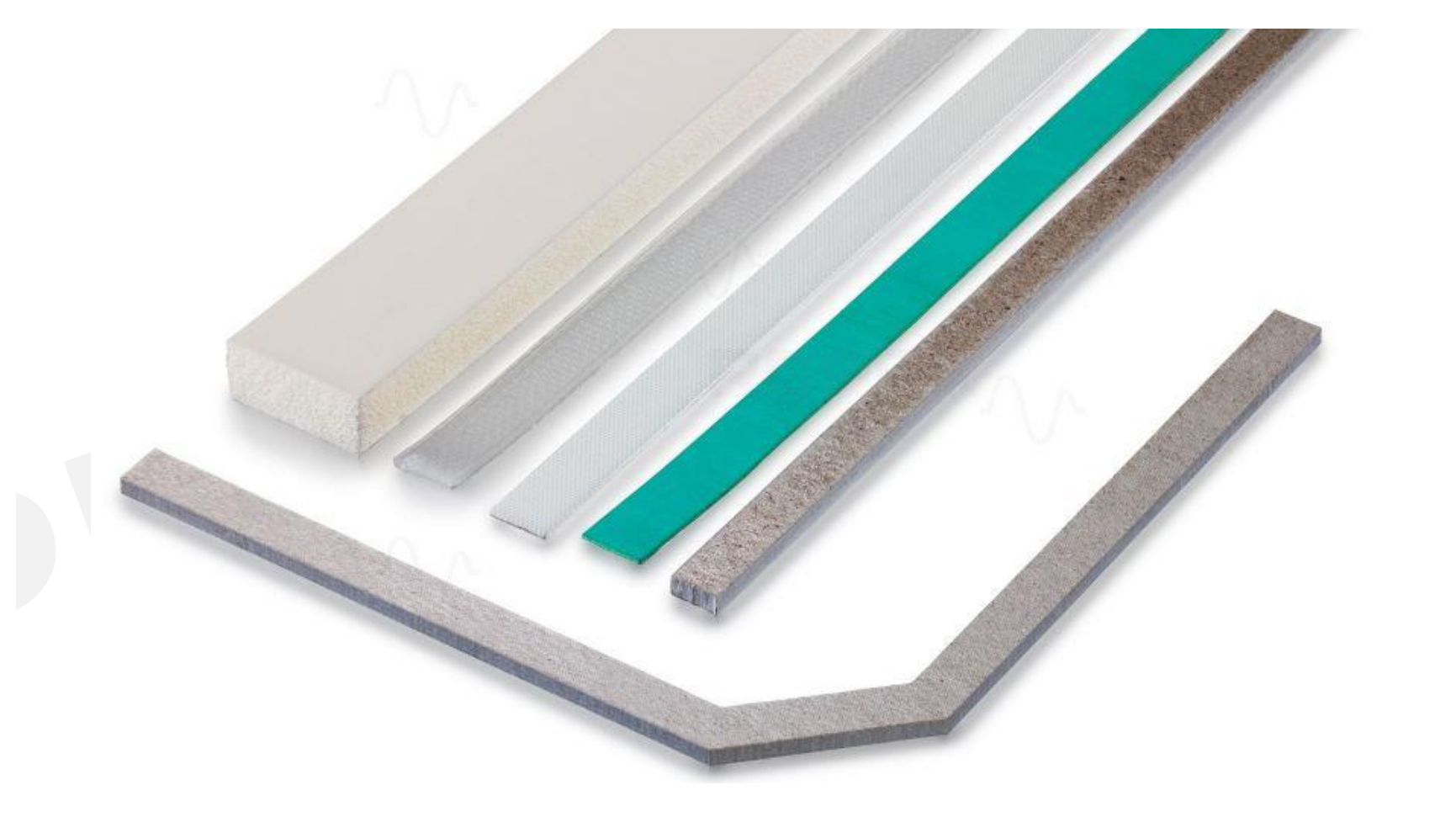
Underlays for RESISTRON® sealing bands are available in both flexible silicone materials with various Shore hardnesses and rigid, non-flexible designs. In addition to providing reliable electrical and thermal insulation, the underlay compensates for mechanical tolerances in the sealing bars and closing mechanism. This makes it possible to achieve a uniform contact pressure along the entire active sealing length — a key requirement for accurate resistance-based temperature measurement and precise RESISTRON® control.
Rigid, non-flexible underlays are particularly well suited for cut-and-seal applications, where dimensional stability and consistent cutting performance are essential.
Silicone Backups (Opposing Sealing Bar Facing)
The design and material selection of the opposing sealing bar facing has a decisive influence on seal quality and cutting performance. The thickness and hardness of the silicone backup can make the difference between a perfect, repeatable seal or cut — and an unacceptable result.
The facing must be sufficiently soft to deform and compensate for minor deviations in alignment, flatness, or parallelism of the heated sealing bar. At the same time, it must provide enough mechanical stability to ensure that the applied closing force is transmitted directly to the sealing band. To ensure clean film release after sealing, the facing should always be covered with PTFE self-adhesive tape.
When sealing with profiles such as tapered bands, the opposing sealing bar facing must conform closely to the band geometry. This ensures full contact and even force distribution across the entire sealing area, while remaining firm enough to prevent the sealing force from being absorbed by surrounding soft areas.
For general sealing applications, a self-adhesive silicone rubber strip with a hardness of approximately 30° Shore, a thickness of 2 mm, and a width of 15 mm has proven effective.
For cutting applications, harder materials are typically required. Silicone hardness values of up to 60° Shore are commonly used, and Durit materials perform particularly well when processing thin plastic films.
The selection becomes more demanding when using band profiles that both cut and seal, such as beaded bands or T-profile bands. In these cases, the silicone backup must deform enough to press the film accurately against the sealing band profile while simultaneously providing sufficient resistance to allow a clean and controlled cut along the centerline of the band. Depending on film material and thickness, the silicone facing may need to be up to 60° Shore in hardness and as much as 6 mm thick.
While experience still plays an important role in selecting the optimal configuration, Vinther & Strand provides application-specific guidance and testing support to ensure the correct combination of sealing band profile, underlay, silicone hardness, and backing thickness for your RESISTRON® process.